As an Amazon Associate this site earns from qualifying purchases.
Quick Picks: Tools & Backup Systems I Actually Use
| Product | Best For | Price | Rating |
|---|---|---|---|
| Whirlpool WHES40E 40,000 Grain Softener | Full replacement | See the product list on this page | 4.4/5 stars |
| AFWFilters Fleck 5600SXT | DIY rebuild/replace | See the product list on this page | 4.6/5 stars |
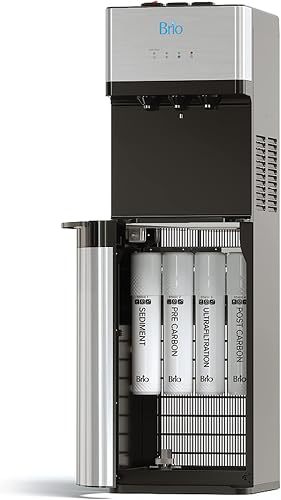
| Brio Bottleless Water Cooler Dispenser w/ 4-Stage Filters (Included) | Salt-free backup | Check price on Amazon | 4.1/5 stars |

- ADVANCED FILTRATION: Brio water dispenser's 4-stage ultrafiltration water purification process reduces contaminants to leave your water exceptionally clean
- 4-STAGE ULTRAFILTRATION: This water filter dispenser uses a sediment filter for silt and dirt; activated carbon reduces chlorine, VOCs, taste, and odor; its membrane, rated at 0.1
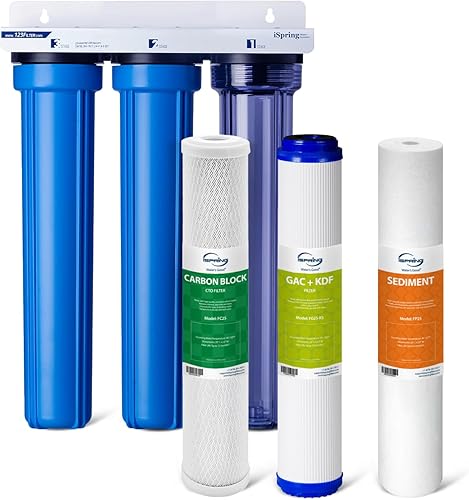
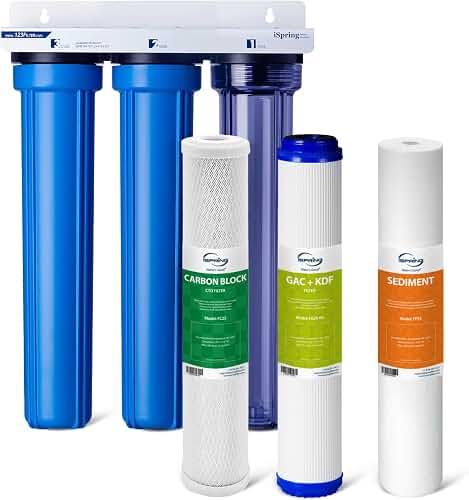
- GAC and KDF Filtration Excellence: Our second-stage GAC and KDF composite filter effectively removes a wide range of contaminants, including chlorine, PFAS, lead, radon
- Effective Sediment Filtration: The first stage features a high-performance PP sediment filter that captures particles as small as 5 microns, ensuring optimal filtration and
- INSTALLATION KIT: The user-friendly cooler comes with all that you need! Full installation kit consists of 6' of 1/4" tubing, 3-way plastic 1/4" push connect adapter, under sink
- 4-STAGE ULTRA FILTER: Enjoy the pure taste of water when you filter with the powerful Ultrafiltration Filter. Utilizing submicron membranes to reduce suspended solids, bacteria
Top Picks


> ### THE BOTTOM LINE > > If your water softener is acting up, 9 times out of 10 it's one of three culprits: > > 1. A rock-hard salt bridge strangling your brine tank > 2. A clogged venturi starving the system of suction > 3. A misconfigured regeneration cycle quietly working against you > > I've battled all three in my own utility closet. Multiple times. And you can fix every one of them this weekend — without calling a plumber.
You're In The Right Place. Here's Why.
If you're staring at chalky water spots ... if your brine tank salt hasn't budged in three weeks... if your shampoo is mysteriously refusing to lather and your skin feels like sandpaper after every shower...
Take a deep breath.
You're about to fix this yourself — and it's going to feel ridiculously satisfying.
I've serviced water softeners in my own . I'm currently running a Fleck 5600SXT . The same handful of issues keeps cropping up, and they're almost always fixable with tools already sitting in your garage.
In this guide, you'll get:
- The exact diagnostic playbook I use
- The replacement parts I've personally paid for (no sponsored fluff)
- The backup systems that saved me when regen cycles went sideways at 11pm
Watch This First: The Visual Crash Course
Before we roll up our sleeves, here's a fantastic visual walkthrough of the same fixes I'll cover below. Sometimes watching the parts actually move is the moment everything clicks:
The 4 Warning Signs Your Softener Is Crying for Help
Before you start unscrewing valves and voiding warranties, confirm the softener is actually the problem. In my experience, these four red flags are nearly always the first whispers of trouble — the canary in the coal mine.
> ### THE SYMPTOM CHECKLIST > > 1. Hard water spots return > This was my very first clue last spring — three dishwasher cycles couldn't shake them. > > 2. Soap refuses to lather > Shampoo, hand soap, dish soap — all suddenly stingy with the suds. > > 3. Salt level in the brine tank hasn't dropped in 3-4 weeks > A healthy system devours salt. Silence here is a scream. > > 4. The control head is frozen mid-cycle or flashing an error code > The digital equivalent of a check-engine light.
The 30-Second Confirmation Test
Grab a hardness test strip and sample the water directly at the softener's output. The reading tells you everything:
| Reading | What It Means | Urgency |
|---|---|---|
| 0 GPG | Softener humming along perfectly | All clear |
| 1-3 GPG | Early warning — investigate soon | Yellow flag |
| 4+ GPG | Active failure — fix this weekend | Red alert |
> MY REAL-WORLD STORY: My Fleck normally puts out a clean 0 GPG. When it crept up to 8 GPG last March, I knew either the resin bed or the regeneration cycle was the guilty party. Spoiler: it was a salt bridge the size of a bowling ball.
Step-by-Step: How to Troubleshoot a Water Softener Like a Pro
Step 1: Check the Salt Level & Hunt for a Salt Bridge
Pop open the brine tank lid. If the salt looks like a solid crusted dome of arctic tundra — smooth, hard, and suspiciously level — congratulations. You've found a salt bridge.
This hardened layer is the single most common villain in water softener regeneration problems I've ever diagnosed. It creates a hollow cavern of air underneath, fooling your softener into thinking everything is fine while the actual salt sits trapped above the water line, doing absolutely nothing.
> ### EXPERT TIP > Press down firmly . If it feels rock-solid instead of crunching like fresh snow, you've got a bridge. Break it up with the broom handle (don't stab — pry), then scoop out the chunks. Add fresh, high-purity salt pellets and your system will be back to inhaling salt within days.
Step 2: Inspect the Venturi & Nozzle Assembly
The venturi is the tiny plastic injector that creates the suction pulling brine into the resin tank during regeneration. It's the size of a thimble — and a single grain of grit can choke it.
How to clean it (10-minute job):
- Put the softener in bypass mode (this isolates it from your
- Unscrew the venturi cap
- Lift out the small plastic injector and screen
- Rinse under warm water — use a soft toothbrush
- Inspect the rubber O-rings for cracks (replace if questionable)
- Reassemble and run a manual regeneration cycle
Step 3: Verify Your Regeneration Settings
This one bites a lot of homeowners. If your settings drifted — or were never right to begin with — your softener may be regenerating too rarely (hard water leaks through) or wasting salt and water (your wallet leaks instead).
The sweet-spot formula I use
- Hardness setting: Match your test result exactly (mine: 22 GPG)
- Regeneration frequency: Every 3-5 days for a family of four
- Regen time: 2:00 AM — when no one's showering
- Capacity: Set to 75% of the manufacturer max for longer resin life
Deep Dive: Watch a Pro Rebuild a Fleck Valve
If Step 2 didn't solve it, you may be looking at a deeper control-head issue. This walkthrough shows exactly how the internals come apart — invaluable before you order parts:
The Salt Bridge Survival Guide: Prevention That Actually Works
Once you've broken up a salt bridge, you don't want to do it twice. Here's what's kept mine bridge-free for 18 months running:
- Use pellet salt, not crystals or rock salt — pellets resist bridging far better
- Don't fill the brine tank more than 2/3 full — air circulation matters
- Keep the tank in a climate-controlled space — humidity is the enemy
- Stir the salt monthly with a broom handle, just to keep it loose
- Buy salt in smaller bags and use it faster (no 6-month-old salt sitting around)
When To Stop DIYing & Call A Pro (Or Just Replace It)
I'm a die-hard DIYer, but I'll be the first to tell you: some problems aren't worth your weekend.
Replace the unit if:
- The resin tank is leaking (cracked fiberglass is a death sentence)
- The control head is older than 12 years and parts are discontinued
- You've replaced two or more major components in the last 2 years
- Repair costs exceed 50% of a new unit
If you want a plug-and-play full system with less DIY assembly, the Whirlpool WHES40E is the workhorse I recommend to friends who don't want a project.
The Final Word
Water softener problems feel intimidating — until you realize the system is just a salt tank, a resin tank, and a small computer telling them when to talk to each other. Master those three pieces, and you'll never panic again.
Start with the salt bridge. Move to the venturi. Verify your settings. In 90% of cases, you'll be back to silky, spot-free water by dinner — and you'll have saved the $250 service call in the process.
Now go open that brine tank lid. You've got this.
Related Reviews
- How to Maintain a Water Softener System: Year-Round Care Tips
- How to Install a Whole House Water Filter: Step-by-Step DIY Guide
- How to Replace Whole House Water Filter Cartridges: Complete Guide
- How to Size a Whole House Water Filter for Your Home
- How to Test Your Home's Water Quality Before Buying a Filter
